Blog Affiliate Marketing Without Being an Influencer
If you want affiliate income but you do not want to become a content personality, the blog is still one of the cleanest options. Not because blogging is trendy again, but because it supports a quiet system: searchable traffic, controlled conversion paths, and assets that keep working when you are offline.
Most people fail at blog based affiliate marketing for a simple reason. They treat it like posting, not like architecture. They write “helpful” articles, add a few links, and hope the internet does the rest. That is not a system. That is a lottery ticket with extra steps.
A blog-based affiliate business becomes stable when three elements align: (1) the search intent you attract, (2) the email capture you control, and (3) the offer path you designed before you wrote a single post. The leverage is not in the writing. The leverage is in the structure.
The system logic behind blog based affiliate marketing
A blog can do two jobs at once: it can rank for questions people are already searching, and it can pre-sell a solution path without requiring you to show up daily.
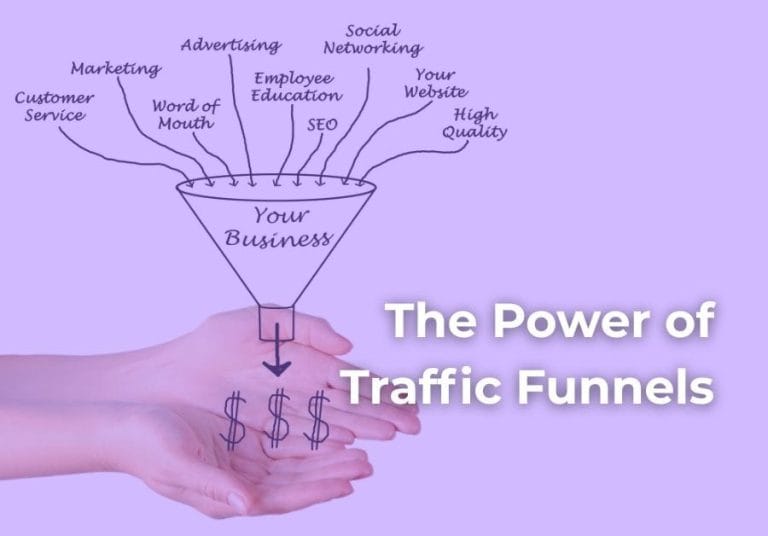
But affiliate revenue is not created by “traffic” in general. It is created by the right traffic arriving at the right page, reading the right angle, then taking the next step in your funnel.
Think of your blog as the front door, not the whole house. If someone walks in and there is no hallway, no signage, and no next room, they leave. When people say “SEO takes forever” or “affiliate marketing is saturated,” a lot of the time what they mean is: they built a front door with nowhere to go.
A functional blog-based affiliate system is:
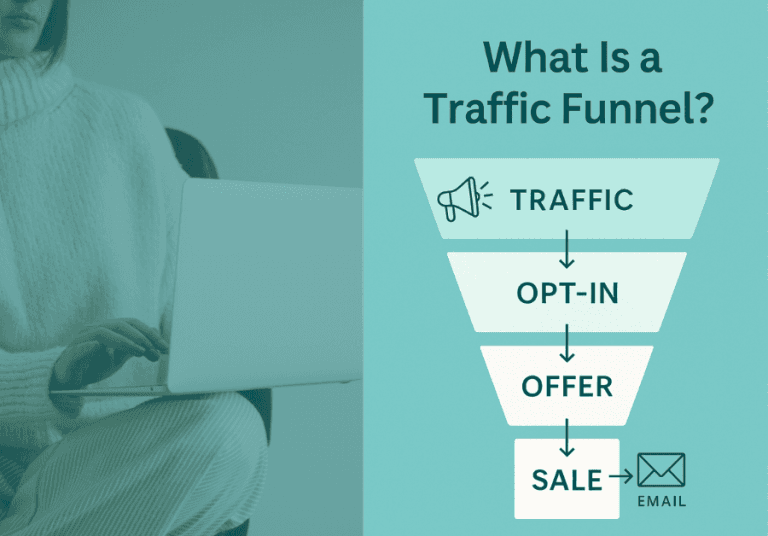
Traffic (SEO) -> Capture (email) -> Nurture (sequence) -> Monetize (affiliate) -> Reinforce (more content that supports the same offer ecosystem)
This is why blogs compound. Each post is not just content. It is an indexed entry point into a conversion path you own.
Choose one problem, not a whole niche
The calm version of affiliate marketing is not “pick a niche.” It is “define a problem you can map.”
A niche is broad. A problem is structured.
Examples of problems that work well for affiliate blogs:
- Someone is trying to choose between tools (decision intent)
- Someone is trying to set up a process (implementation intent)
- Someone is trying to fix something that is not working (pain intent)
Problems that tend to convert poorly are the ones that are inspirational but not transactional. “How to be more productive” is vague. “How to organize client onboarding emails” is specific and often tied to a tool or template decision.
The trade-off: narrower problems can feel limiting at first. In practice, they build faster because your content connects to the same set of offers, the same email sequence, and the same reader mindset.
Build your affiliate ecosystem before you publish
Affiliate marketing gets messy when you treat each post like its own monetization project. You end up with scattered links, inconsistent recommendations, and no real narrative. It also becomes hard to stay ethical because you start chasing commissions instead of building trust.
Instead, build an ecosystem.
Pick 3-6 affiliate products that actually solve the core problem your blog is centered on. These should be tools or services you can recommend repeatedly in different contexts without stretching the truth. If you cannot imagine recommending it in ten different articles without forcing it, it is not an ecosystem product. It is a random link.
Then define your offer roles:
Your “default tool” recommendation: what you point to most often
Your “upgrade” recommendation: for readers with more complexity or budget
Your “supporting tool” recommendations: products that solve adjacent friction
This is how you avoid the common affiliate trap of writing ten unrelated reviews that never add up to anything.
Ethics matter here, not as a disclaimer, but as a strategy. If a tool is only good for a narrow use case, say so. If there is a free option that works for beginners, acknowledge it. Long-term blogs win because they are consistent and believable, not because they squeeze every click.
Content that converts quietly: intent, not volume
If you are trying to do this without burnout, you cannot win by volume. You win by writing pages that match search intent and move readers forward.
A simple intent ladder helps:
Awareness intent: “what is” and “why” content that frames the problem
Consideration intent: comparisons, alternatives, best-for scenarios
Decision intent: reviews, pricing, setup, templates, “how to choose”
Affiliate blogs make money fastest from consideration and decision intent because the reader is already close to a purchase.
The trade-off: those keywords are often more competitive. The way you compete is not by being louder. It is by being clearer. Your job is to reduce decision fatigue.
If you can write with specificity – who it is for, who it is not for, what setup looks like, what breaks, what to do instead – you can outrank bigger sites that write generic paragraphs and call it a “review.”
Capture is not optional if you want stability
If all you do is publish posts and hope for affiliate clicks, your income will be fragile. Rankings shift. Programs change. Browsers block tracking. People read, leave, and forget.
Email is the stabilizer. It turns anonymous traffic into a repeatable audience you can serve and monetize over time.
The simplest structure is:
One core lead magnet that matches your blog’s main problem
One opt-in placement above the fold and one in-content placement where it makes sense
One short email sequence that continues the same conversation the post started
Your lead magnet does not need to be complicated. A checklist, a decision framework, a tool stack map, a setup guide, or a template works well because it feels like a next step, not a freebie for freebie’s sake.
If your blog is about “choosing the right email platform,” a lead magnet like “Email Platform Decision Grid” makes sense. It captures the exact reader who is about to buy.
Funnel logic: the missing middle
Most affiliate blogs fail in the middle.
They have content and they have links, but they do not have an intentional bridge between reading and buying. That bridge can be a lead magnet and email sequence, but it can also be on-page funnel logic.
On-page funnel logic looks like:
- A clear recommendation path (if you are X, start here)
- A setup section that reduces implementation fear
- A “common mistakes” section that addresses hesitation
- A CTA that matches where the reader is mentally
If the reader is in consideration mode, your CTA should not jump straight to “buy now.” It should help them choose. If the reader is in decision mode, your CTA should remove friction: setup steps, what to expect, what to avoid.
This is where faceless brands have an advantage. You are not trying to be liked. You are trying to be useful. Usefulness converts.
A simple publishing cadence that compounds
You do not need 100 posts to make this work, but you do need consistency and internal alignment.
A practical cadence is to publish in clusters. Pick one ecosystem product and publish 4-6 pieces around it over a month or two:
- One “how to choose” article
- One comparison against a main competitor
- One implementation guide
- One troubleshooting or mistakes post
- Optionally, one alternatives post and one template or workflow post
This cluster approach builds topical depth, improves internal linking, and makes it easier for Google (and readers) to understand what your site is about.
It also supports your email funnel, because your lead magnet and your sequence can reference multiple posts that all point to the same recommendation set.
The tool stack: keep it low-complexity
Blog based affiliate marketing does not require a complicated tech stack. The more moving parts you add early, the more maintenance you create.
You need three things:
- A website platform you can manage without friction
- An email service provider that can deliver a simple sequence reliably
- A way to track what content is performing so you can double down
Everything else is optional until you have proof of traction. Automation is useful, but only after your conversion path is clear. Automating confusion just creates faster confusion.
If you want a structured approach to building this quietly, this is the kind of system architecture we teach at Miss K Digital: traffic and capture alignment first, then funnel logic, then monetization that holds up long-term.
What “success” actually looks like here
A realistic goal is not “post and wait.” It is:
- Build 10-20 pages that rank for specific intent
- Capture a small percentage of readers consistently
- Convert a portion of subscribers through clean recommendations
- Then expand with more clusters around the same ecosystem
Some weeks will be quiet. That is normal. Blogging is a compounding asset, not a trending one. The work is front-loaded, and the leverage shows up later.
It also depends on your category. Software and subscription tools often convert well but can be competitive. Physical products can bring volume but lower commissions and more returns. Courses can pay more but require higher trust and stronger proof. Choose based on what you can recommend with integrity and explain with clarity.
The best signal you are building a real system is this: your older posts keep bringing in new subscribers and those subscribers convert without you writing something new every day.
Closing thought: if you want blog based affiliate marketing to feel calm, stop asking, “What should I post next?” and start asking, “What path am I building?” When the path is defined, the content becomes execution, not constant decision-making.