SEO vs Pinterest for Digital Products
If you sell digital products and do not want to build your life around posting content every day, the traffic question gets very practical very quickly. SEO vs Pinterest for digital products is not really a debate about which platform is better in general. It is a question of which one fits your system, your energy, and your monetisation path without creating more noise than leverage.
That distinction matters. A lot of creators choose a traffic source based on what looks active, fast, or popular. Then they end up with clicks that do not convert, a funnel that does not match intent, or a marketing workflow that quietly becomes another part-time job. If your goal is long-term digital income without becoming the face of the brand, traffic needs to connect cleanly to capture, nurture, and sales.
SEO vs Pinterest for digital products: the real difference
At a surface level, both SEO and Pinterest can send people to a shop, landing page, or blog post. Both can work for digital products. Both can be used without personal branding. That is where the similarity ends.
SEO is intent-led. Someone searches because they want an answer, a tool, a template, or a solution. The visit usually starts with a specific problem. That makes SEO strong for products that solve defined needs – think checklists, planners, guides, swipe files, templates, training, or niche educational offers.
Pinterest is browse-led. People are collecting ideas, planning future actions, or looking for visual inspiration. The click can still convert, but the user is often earlier in the decision process. Pinterest traffic can be useful for discovery, especially for visually legible products, but it usually needs a stronger bridge between interest and purchase.
So the question is not simply traffic volume. It is traffic alignment. What mindset is the person in when they arrive, and does your page meet that mindset?
Where the monetisation logic changes
With SEO, monetisation often starts earlier because the user intent is already closer to the problem your offer solves. A search like “meal planner template for busy mums” or “Canva ebook template” carries commercial logic. If the page answers the search well and the offer is relevant, the path to conversion can be short.
With Pinterest, the path is often longer. A user might save the pin, click later, browse more options, or need warming up through email before buying. That does not make Pinterest weak. It just means it behaves better when paired with a solid capture system rather than a direct-to-product expectation.
This is where many digital product sellers get frustrated. They look at outbound clicks and assume traffic should turn into sales on its own. But traffic is only one layer. Without a clean lead magnet, email sequence, and offer progression, both channels underperform.
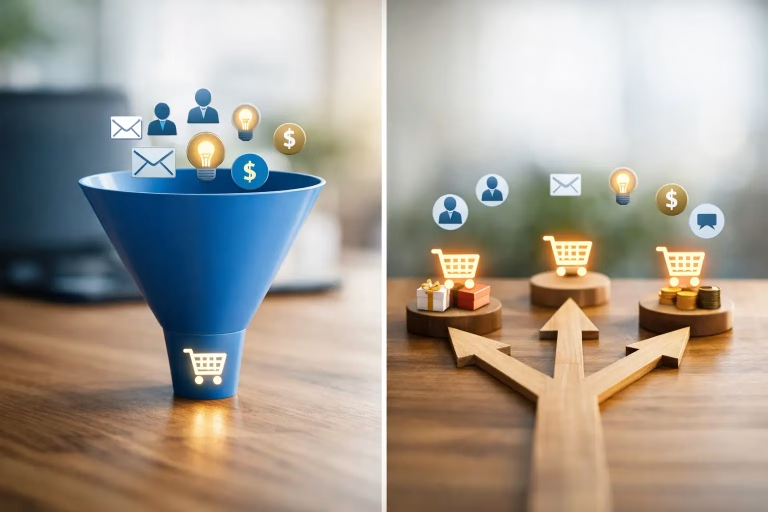
In the 3-Step Invisible Income System, this sits in the first step – traffic and capture alignment. You are not just choosing where visitors come from. You are defining what they land on, what action they take next, and how that action moves them closer to monetisation.
SEO tends to compound better
If your preference is stability over constant activity, SEO usually has the stronger long-term profile.
A well-targeted article can bring in traffic for months or years with occasional updates. That is the compounding advantage. The asset keeps working after the initial build phase. You may need time to rank, and yes, SEO is slower at the start, but the return can become more predictable because the content sits inside a search ecosystem built around demand.
Pinterest can compound too, but in a different way. Pins can circulate over time, especially if the topic has ongoing interest. Still, Pinterest usually asks for more ongoing output. New creatives, fresh pin designs, testing different angles, seasonal shifts – it is lighter than full social media content creation, but it is not entirely hands-off.
For burnout-prone builders, that difference matters. If you want a quieter system with fewer moving parts, SEO is often easier to stabilise. You write the page, optimise it properly, connect it to the right funnel, and improve from there.
Pinterest can be faster, but less stable
Pinterest often wins on speed. You can publish a pin and see movement sooner than you would with a new SEO article. That early feedback is useful, especially if you are validating a niche or testing product angles.
But fast visibility is not the same as dependable traffic. Pinterest platform behaviour changes. Seasonal trends shift. Some niches perform beautifully for a few months and then cool off. If your whole system depends on Pinterest momentum, you may end up rebuilding attention rather than strengthening assets.
That is why Pinterest works best as an amplifier, not the foundation, for most digital product businesses that want predictable growth. It can support discovery, content distribution, and lead generation. It is less reliable as the only engine behind a long-term income system.
Which platform fits which digital product?
SEO tends to suit problem-solving products. If your offer helps someone complete a task, fix an issue, learn a process, or save time, search traffic is usually the better match. This includes digital templates, niche guides, business resources, educational mini-products, and practical downloads.
Pinterest tends to suit products with strong visual cues or aspirational planning energy. Think printable decor, wedding templates, journals, home planners, kids activities, or visually appealing business resources. The product needs to look compelling in a static image and make sense in a browsing environment.
There is overlap, of course. A well-designed budgeting spreadsheet could work on both. But the funnel should change depending on the source. From SEO, a direct product page or tight lead magnet can work well. From Pinterest, a softer entry point such as a relevant free resource usually performs better because the click is less purchase-ready.
Time, skill, and maintenance trade-offs
SEO asks for keyword research, content structure, on-page optimisation, and patience. The skill barrier is real, but once you understand the framework, the work becomes methodical. It suits people who prefer writing, research, and logical systems.
Pinterest asks for visual packaging, trend awareness, headline testing, and regular publishing. It is simpler to start, but it can become repetitive if you dislike design or do not want another content workflow to manage.
Neither option is fully passive. Both require setup. Both benefit from testing. But the maintenance style is different. SEO is front-loaded and strategic. Pinterest is lighter upfront but often more ongoing.
That makes SEO a better fit for creators who want to build fewer, stronger assets. Pinterest is useful if you want a faster traffic layer and do not mind some recurring creative work.
The strongest setup is usually not either-or
For many faceless digital product businesses, the smartest answer is not choosing one forever. It is choosing a primary channel and a support channel.
If you want the most stable base, build around SEO first. Create search-led content that matches product intent, add a lead capture layer, and connect readers to a simple email sequence. Then use Pinterest to distribute selected articles or lead magnets, especially if the topic has clear visual appeal.
That structure keeps the system calm. SEO does the heavy lifting over time. Pinterest brings additional discovery without becoming the centre of the business. The leverage comes from using one core asset in more than one place, not from trying to be everywhere.
For example, one blog post targeting a strong search term can lead to a free blueprint, feed an email sequence, and support a relevant entry product. A set of Pinterest pins can then send extra traffic to that same page. One asset, multiple jobs.
So which should you choose first?
If you are selling digital products and want long-term, lower-noise growth, start with SEO if your product solves a clear problem and you are willing to wait for compounding results.
Start with Pinterest first if your product is highly visual, your niche is naturally strong on the platform, and you need earlier traffic signals while your broader system is still being built.
If you already have some traction but sales feel inconsistent, the issue may not be traffic source at all. It may be that the landing page, freebie, email sequence, or offer path is not aligned with the visitor intent coming in. More traffic will not fix a weak system.
That is the quieter truth behind the SEO vs Pinterest for digital products question. The best channel is the one that fits your funnel logic, supports your preferred working style, and compounds without demanding constant visibility.
If you want to map that properly, the 3-Step Invisible Income System is the best next layer. It lays out how to structure traffic, capture, and monetisation so you are not relying on random content output to make your digital products sell.
Choose the channel you can sustain, then build the structure that lets it keep working while you get on with your life.