Simple Funnel Mapping for Beginners
Most beginners do not have a traffic problem first. They have a structure problem. They post, test offers, change tools, tweak landing pages, then wonder why nothing compounds. Simple funnel mapping for beginners matters because it gives each step a job. Instead of collecting random tactics, you define how attention becomes trust, how trust becomes action, and how action becomes revenue.
If you are private, burnout-prone, or simply tired of noisy online business advice, this is where things usually start to settle down. A funnel map is not a fancy diagram for marketers. It is a basic decision tool. It shows what someone sees first, where they go next, what you ask them to do, and how that path supports monetisation without needing constant content output.
What simple funnel mapping for beginners actually means
At its simplest, funnel mapping is writing down the path from traffic to offer. That is it. Not every page, not every automation, not every future idea. Just the core movement.
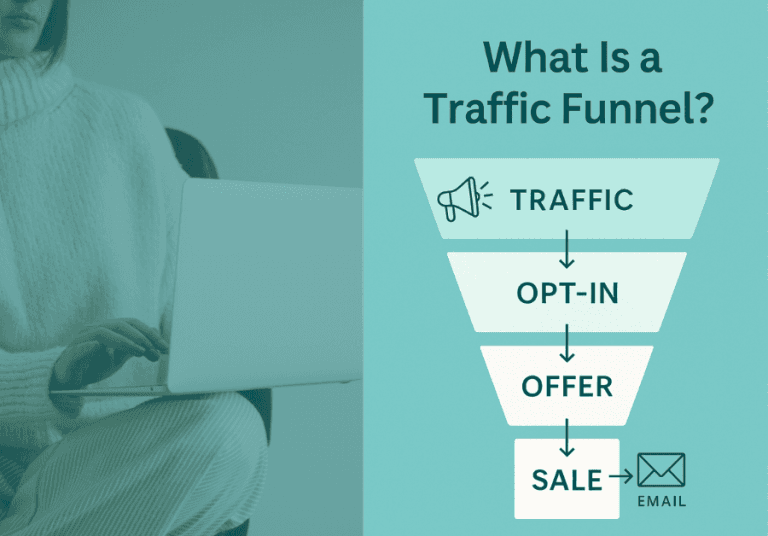
For most beginners, the map has four parts. A traffic source brings in the right people. A capture point turns anonymous visitors into email subscribers. A nurture step helps them understand the problem and your approach. Then an offer gives them a clear next action.
The reason this matters is leverage. When those parts align, one blog post, one Pinterest pin, one search-driven video, or one resource page can keep feeding the same system quietly over time. When they do not align, traffic leaks, subscribers go cold, and the offer feels disconnected.
A funnel map helps you answer three practical questions early. What brings people in? What makes them stay? What gets monetised?
Start with the end, not the top
Beginners often start by asking, “What content should I make?” That usually creates more noise. A better question is, “What offer is this funnel meant to support?”
If you do not know the destination, the map cannot be clean. Your funnel only makes sense when the monetisation point is defined first. That could be an affiliate offer, a low-ticket digital product, or a core program. The format matters less than the fit.
For example, if your offer teaches email systems, your lead magnet should not be about branding trends. If your affiliate recommendation solves a traffic problem, your content should attract people actively trying to solve traffic. This sounds obvious, but most weak funnels break here. The top of the funnel attracts one type of person, and the bottom tries to sell something else.
So begin with the offer and work backwards. Define who it is for, what problem it solves, and what level of commitment it requires. Then map the path that makes that next step feel logical.
The four-part beginner funnel map
You do not need a whiteboard covered in arrows. A simple document or notes app is enough. The cleanest version usually looks like this.
1. Traffic
Choose one core traffic source first. Not three. One. Search-based blog content, Pinterest, YouTube search, or another intent-driven channel usually works better for quiet systems than platforms that demand daily visibility.
Your traffic source should match your temperament and your offer. If you prefer structured writing, blog content can compound well. If your content is visual, Pinterest may support that better. If your audience needs explanation before buying, searchable video can help. There is no perfect channel in isolation. There is only fit.
2. Capture
Once someone lands on your content, what are they invited to do next? This is your capture point. Usually it is a free resource, short blueprint, checklist, or framework tied closely to the topic they were already reading about.
A vague freebie weakens the system. A specific one strengthens it. If the article is about funnel planning, the opt-in should help them map a funnel. Not a generic business starter pack. Relevance does most of the conversion work.
3. Nurture
This is where trust is stabilised. Nurture does not mean writing dramatic email sequences. It means helping people understand the logic behind your method, the mistakes you help them avoid, and why your offer exists.
For beginners, this is often just a short email sequence with clear positioning. One email can define the problem, another can show the framework, and another can introduce the next step. Calm and useful is enough.
4. Offer
The offer is the monetisation point, but it should feel like continuation, not a pivot. If the capture promised clarity, the offer should provide implementation. If the lead magnet helped define the problem, the offer should help solve it.
That is the difference between a funnel that converts and one that feels stitched together.
Why beginners overcomplicate funnel maps
Most complexity comes from trying to build for every future scenario at once. People create multiple lead magnets, tag-based automation, several offers, and too many traffic channels before the first path is even working.
That is not strategy. It is usually decision fatigue in disguise.
A beginner funnel map should be narrow enough to test and stable enough to improve. One traffic source. One lead magnet. One welcome sequence. One offer path. Once that works, you can expand. Before that, extra layers usually create confusion rather than growth.
There is also a trade-off here. Simplicity can feel slow at first because you are not chasing every tactic. But it compounds better because each improvement strengthens the same core system instead of starting from scratch again.
How to map your funnel on one page
Open a blank document and write these five lines.
Traffic source: where people find you.
Entry content: the page, post, or asset they land on first.
Capture point: the free resource or call to action.
Nurture path: what happens after they opt in.
Offer: what they are eventually invited to buy.
Then fill in one answer for each. Keep it practical. For example, your map might say search-based blog traffic, one article about affiliate funnel mistakes, a free 3-step blueprint, a four-email welcome sequence, then a structured digital offer.
Once you can read that map in under 30 seconds and understand the logic, you are close. If it sounds muddled, the audience journey is probably muddled too.
Where traffic connects to monetisation
This is the part people skip, then wonder why conversions stay flat. Traffic is not valuable because it exists. It is valuable when the intent of that traffic matches the offer path.
Someone searching for beginner funnel help is closer to buying a funnel-related solution than someone casually scrolling broad business content. Intent reduces friction. That is why low-noise traffic sources often outperform louder ones. They bring in people already looking for a solution.
This is also where ethical affiliate monetisation can fit well. If your content solves a specific implementation problem and a tool genuinely supports that next step, the recommendation can sit naturally inside the funnel. But the tool should support the system, not become the system.
In other words, monetisation works best when it is structurally earned.
How this fits into a long-term income system
A funnel map is not the full business. It is one layer of the system architecture. But it is a critical layer because it connects visibility to revenue in a repeatable way.
Inside the 3-Step Invisible Income System, funnel mapping sits in the middle of the logic. You need traffic that matches the problem, capture that matches the traffic, and an offer path that matches both. Without that alignment, even good content struggles to compound.
This is why quiet online income is less about doing more and more about reducing disconnect. The more tightly each piece fits, the less effort you waste trying to force results from scattered tactics.
Common beginner mistakes to avoid
The biggest mistake is mapping the tool stack before mapping the customer path. Software does not fix weak logic. A second mistake is creating a lead magnet based on what sounds useful instead of what prepares someone for the offer. A third is trying to sell too early without enough context.
There is also the opposite problem – nurturing forever and never making an offer. If your emails are helpful but directionless, people may like your content and still take no action. A funnel should guide, not just inform.
If you want a practical next step, sketch one full path before touching anything else. Define the traffic source, the capture asset, the first three emails, and the offer. Then test that path with real traffic before expanding it.
If you want the complete structure behind that process, the 3-Step Invisible Income Blueprint is the clearest place to start. It shows how traffic, funnel logic, and monetisation fit together as one quiet system rather than a pile of disconnected tactics.
A good funnel map should make your business feel calmer. If it still feels messy, you probably do not need more effort. You need a cleaner path.