A Beginner Funnel for Digital Products
Most beginners do not have a traffic problem first. They have a sequence problem.
They create a digital product, add a checkout link, mention it a few times, and wait for sales that never stabilize. Then they assume the offer is wrong, the niche is too crowded, or they need to post more. Usually, the issue is simpler than that. There is no funnel logic connecting attention to trust, and trust to purchase.
A digital products funnel for beginners is not a complicated map with ten pages, five upsells, and aggressive email automation. It is a basic system that moves someone from mild interest to a clear next step. If you want quiet, long-term income without building your life around content performance, this matters more than almost anything else.
What a digital products funnel for beginners actually is
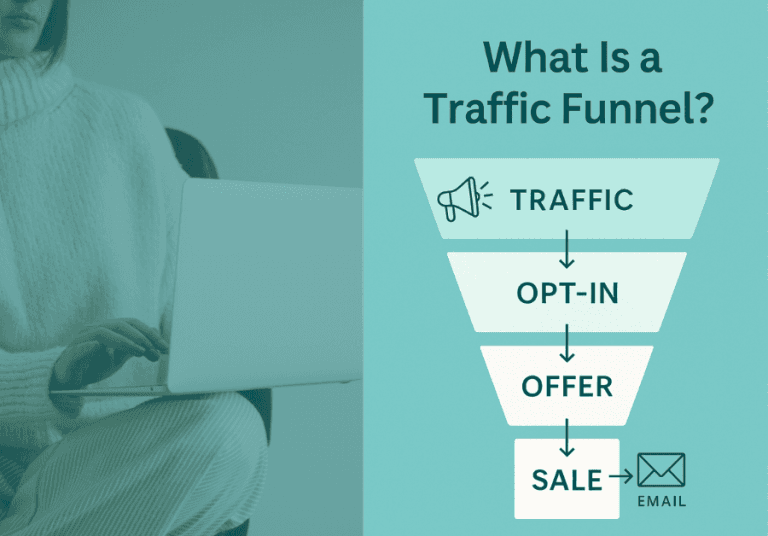
At the simplest level, a funnel is a path. Someone finds you, joins your email list, receives a useful next step, and eventually buys a product that fits the problem they already know they want solved.
That is the system logic.
Traffic brings people in. Capture turns anonymous visitors into subscribers. Nurture adds context and trust. The offer converts that trust into revenue. If one of those pieces is missing, the whole structure gets unstable.
Beginners often skip capture and nurture because they want faster results. That creates a fragile setup. If every sale depends on someone seeing one post and buying immediately, you do not have a system. You have occasional luck.
The better approach is quieter and more reliable. Build one clean path that can compound.
The 4-part funnel structure that makes sense first
You do not need a complex funnel at the beginning. You need four connected parts that match each other.
1. Traffic
Traffic is how people discover your content or offer. For a beginner, this usually comes from search-based content, Pinterest, a niche blog, short educational content, or a small library of evergreen posts. The key is not volume. The key is alignment.
If your traffic is broad but your product solves a specific problem, conversions will stay weak. A person reading general inspiration is very different from a person searching for a practical template, a beginner framework, or a solution to a defined issue.
This is why the traffic source matters less than the intent behind it. Calm, low-noise traffic can outperform high-volume traffic if the match is stronger.
2. Capture
Capture is where a visitor becomes a lead, usually through an email opt-in. This step is often handled badly because beginners either offer nothing, or they create a freebie that is too generic to attract serious buyers.
A good lead magnet should be connected to the paid product, not separate from it. If your paid product helps someone build a simple sales system, your free resource might be a checklist, a starter blueprint, or a framework that helps them define the first layer of that system.
The goal is not to impress people with how much free information you can give away. The goal is to attract the right person and set up the next step.
3. Nurture
Nurture is where many funnels either become persuasive or become forgettable. This is usually a short email sequence that helps the subscriber understand the problem more clearly, see the cost of staying stuck, and understand why your method works.
This does not need hype. In fact, hype usually weakens trust with a thoughtful audience.
A strong beginner nurture sequence often does three things. It defines the problem in a structured way, reframes common mistakes, and introduces the paid offer as the logical next step. That sequence can be three to five emails. It does not need to be longer unless your offer is more complex.
4. Offer
The offer is the paid step. For beginners, the easiest mistake is creating something too large, too vague, or too advanced.
Your first digital product should solve one problem clearly. A template pack, mini guide, starter system, workbook, or practical blueprint usually works better than a massive course at this stage. Smaller products are easier to finish, easier to position, and easier to improve once real buyers start giving you feedback.
That is where leverage begins. Not from making your funnel bigger, but from making each step more precise.
How traffic connects to monetization
This is the part most people miss.
Traffic does not make money by itself. Traffic only has value when it enters a structure designed to convert interest into a measurable next action. That next action is usually the email opt-in, because email gives you a stable asset you control.
From there, monetization happens in layers.
The first layer may be a low-ticket digital product. The second may be an affiliate recommendation that supports the same outcome. The third may be a deeper offer for people who want more implementation help, more templates, or a more complete framework.
This is why random product promotion tends to underperform. If traffic enters through one topic and the monetization points in another direction, the path breaks.
For example, if someone finds you through content about building a simple digital income system, the next step should stay close to that topic. Offering a free checklist on funnel setup, followed by a small beginner blueprint, followed by a more complete method, makes sense. The buyer journey stays coherent.
That coherence is what increases conversion without needing more noise.
A practical beginner funnel example
Let’s say you want to sell a digital workbook that helps new creators map a simple income system.
A clean funnel might look like this:
A search-friendly blog post or Pinterest pin brings someone to content about common mistakes in setting up a beginner income system. Inside that content, they are offered a free planning worksheet. After opting in, they receive a short email sequence that helps them define their audience, choose one monetization path, and avoid building a disconnected funnel. Then the paid workbook is introduced as the next step because it helps them implement the structure in more detail.
That is a real funnel. It is simple, but it has logic.
If you want to extend it later, you can. You might add an affiliate tool recommendation that supports delivery, email setup, or product hosting. You might also add a stronger core offer after the entry product. But none of that should come before the basic path works.
What beginners usually get wrong
The first problem is overbuilding. A lot of people create too many moving parts before they have proof that the core message converts. They add multiple freebies, multiple products, complicated automations, and scattered calls to action. More pages do not create more leverage if the structure is unclear.
The second problem is weak offer progression. If your freebie attracts one type of person, but your paid product serves a different stage of awareness, conversion drops. People do not buy because the path feels discontinuous.
The third problem is expecting instant conversion from cold traffic. Some niches do support faster buying behavior, especially low-ticket offers with strong search intent. But many buyers need a few touchpoints. That is normal. A funnel should account for that instead of treating every visitor like they should be ready immediately.
The fourth problem is treating email like an afterthought. Email is not the extra piece. It is often the asset that stabilizes the entire system.
The tools matter less than the structure
Beginners often spend too much time choosing platforms and not enough time defining the flow.
Yes, you need basic tools: a landing page builder, an email platform, a checkout system, and a place to host the product. But almost any reasonable tool stack can work if the message and path are clear. A poor funnel on expensive software is still a poor funnel.
Start with low complexity. One traffic source. One lead magnet. One email sequence. One entry offer.
That is enough to learn from.
Once you know where people click, where they subscribe, and where they stop, you can improve the right part instead of guessing. That is how systems become profitable over time. They are refined, not constantly replaced.
A better way to think about funnel success
If you are new, do not judge the funnel only by immediate sales.
First look at whether the right people are opting in. Then look at whether they open and click your emails. Then look at whether the offer gets interest. Sales matter, obviously, but early data is often directional before it is dramatic.
A funnel is not supposed to feel exciting. It is supposed to feel stable.
That is especially true if you are building a business that does not depend on personal branding or daily visibility. The goal is to create a system that quietly improves as your assets compound. One well-aligned funnel can do more for your long-term income than months of inconsistent posting.
At Miss K Digital, that is the lens worth keeping: not how to say more online, but how to structure the path so each piece does its job.
If you are building your first funnel, keep it small enough to understand and strong enough to repeat. Simple systems are easier to trust, easier to optimize, and far more likely to last.